How to choose your home’s colours to suit the light and the space
Simple rules for choosing wall and furniture colours: the effect of natural light, the size of the room, and how to balance colours across the whole home.
Choosing colours is one of the interior design decisions that most affects how a place feels, and it is also one of the easiest to correct before execution if you know what to look at. These are general guidelines to help you start.
1. Start from the light, not from the catalogue
A room that faces the morning sun shows colours very differently from a room facing north or one that gets little natural light. Warm light pushes shades towards yellow, cool light pushes them towards grey and blue. So try the colour sample on the wall itself and look at it in the morning, at noon, in the evening and under the artificial lighting you will really use, and do not rely on how a colour looks in a picture or on a screen.
2. Relate the colour to the size of the space
Light colours reflect light and visually enlarge small spaces, while darker shades give large rooms a feeling of warmth and depth. You can also use a darker colour on a single wall as a focal point and keep the other walls neutral.
3. Use the balance rule
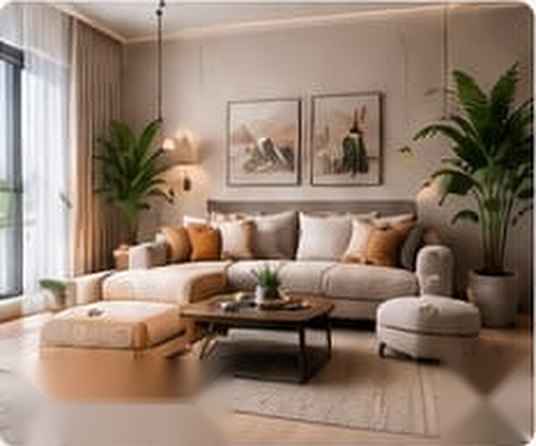
A common design rule: a calm main colour covering most of the space, a secondary colour in the furniture and curtains, and an accent colour in accessories, cushions and artwork. This split looks coordinated and makes it easy to change the accessories later without repainting.
4. Think of the whole home, not one room
When you move between rooms that open onto each other, it is better for the colours to come from one family so the transition does not look abrupt. Separate rooms can take a different character: calm shades for bedrooms, livelier colours for the kitchen or the children’s room.
5. Do not forget materials and floors
The colour of the floor, wooden furniture and worktops is relatively fixed and hard to change, so choose the wall colour with them in mind. The finish matters too: a satin paint is easier to clean in kitchens and corridors, while a matt finish suits walls you want to look soft and calm.
One last tip: what suits another home does not necessarily suit yours. Seeing the place and its actual light is what decides the right choice.
Note: this article is general information for awareness in interior design and does not replace seeing the place and studying its condition. Colours, materials and costs differ from one project to another.